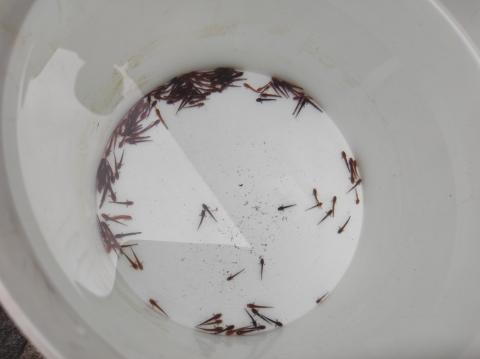


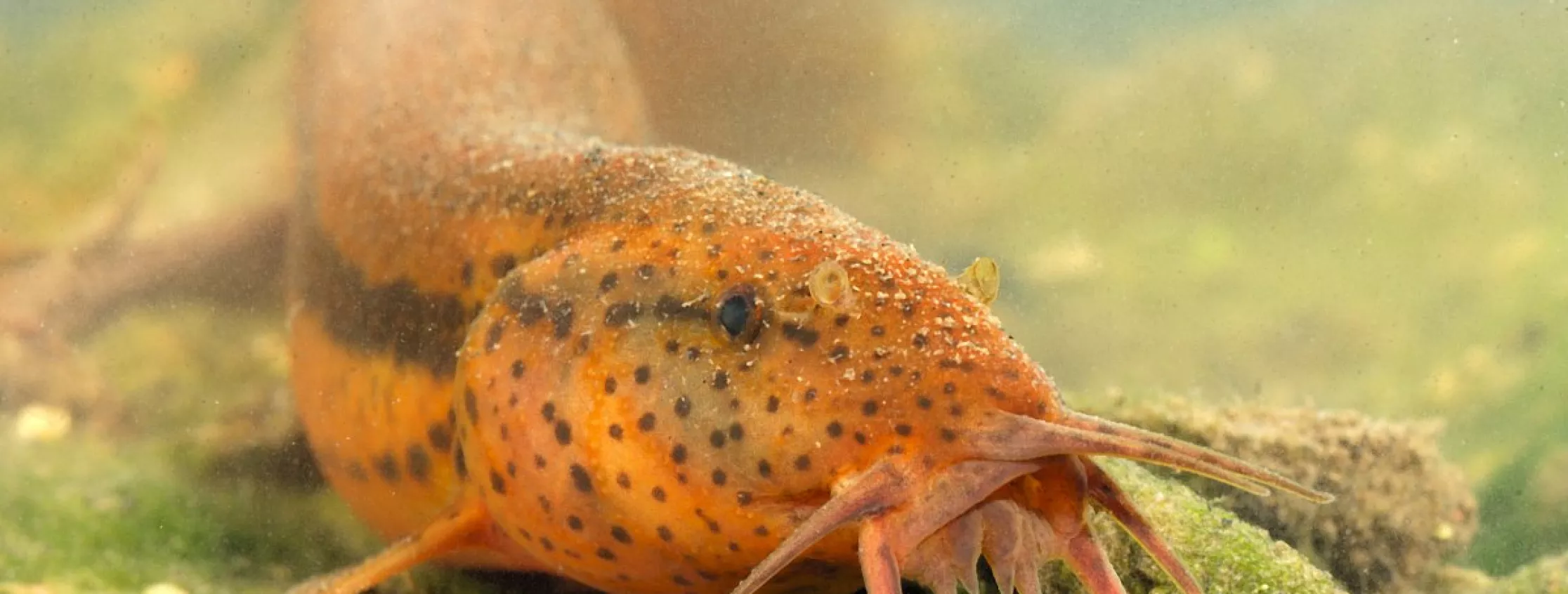
Last week, approximately 40,000 juvenile European weatherfish were released into the Schulensbroek and Webbekomsbroek in Halen, Herk-de-Stad, Lummen, and Diest. This fish species has become very rare in Flanders. By releasing farmed specimens, the Institute for Nature and Forest Research (INBO) hopes to save the small remaining populations.
“Releasing the large loach is not only important for biodiversity in the Schulensbroek and Webbekomsbroek; the fish is also part of our cultural heritage,” said Jeroen Van Wichelen (INBO). “In the past, people used to keep a large loach at home in a jar because it could predict the weather. If the fish became restless, people knew the weather was about to change.”
“In the space of 50 years, we’ve lost 75% of our wetlands in Flanders,” says Van Wichelen. “And those are precisely the areas that large loaches need to survive.” In 2021, a reintroduction plan was drawn up for the species, and thanks to the Sigma Plan and the Blue Deal, things are looking promising: “We’ve optimized the breeding program for the species and prioritized habitats with high potential.
The releases take place over several consecutive years and in large numbers. For example, last week about 20,000 juveniles were released at some 15 locations in the Schulensbroek and about the same number at about 10 locations in the Webbekomsbroek.
“These are tiny fish just a few weeks old, less than a centimeter long. We release so many because a large portion of them will be eaten by water beetles or other fish. If even 1 percent survives, we’ll be very happy. That’s how it works in the wild, too. Later this summer, we’ll release more loaches in the same areas—these will be fish measuring 10 to 15 centimeters.”